
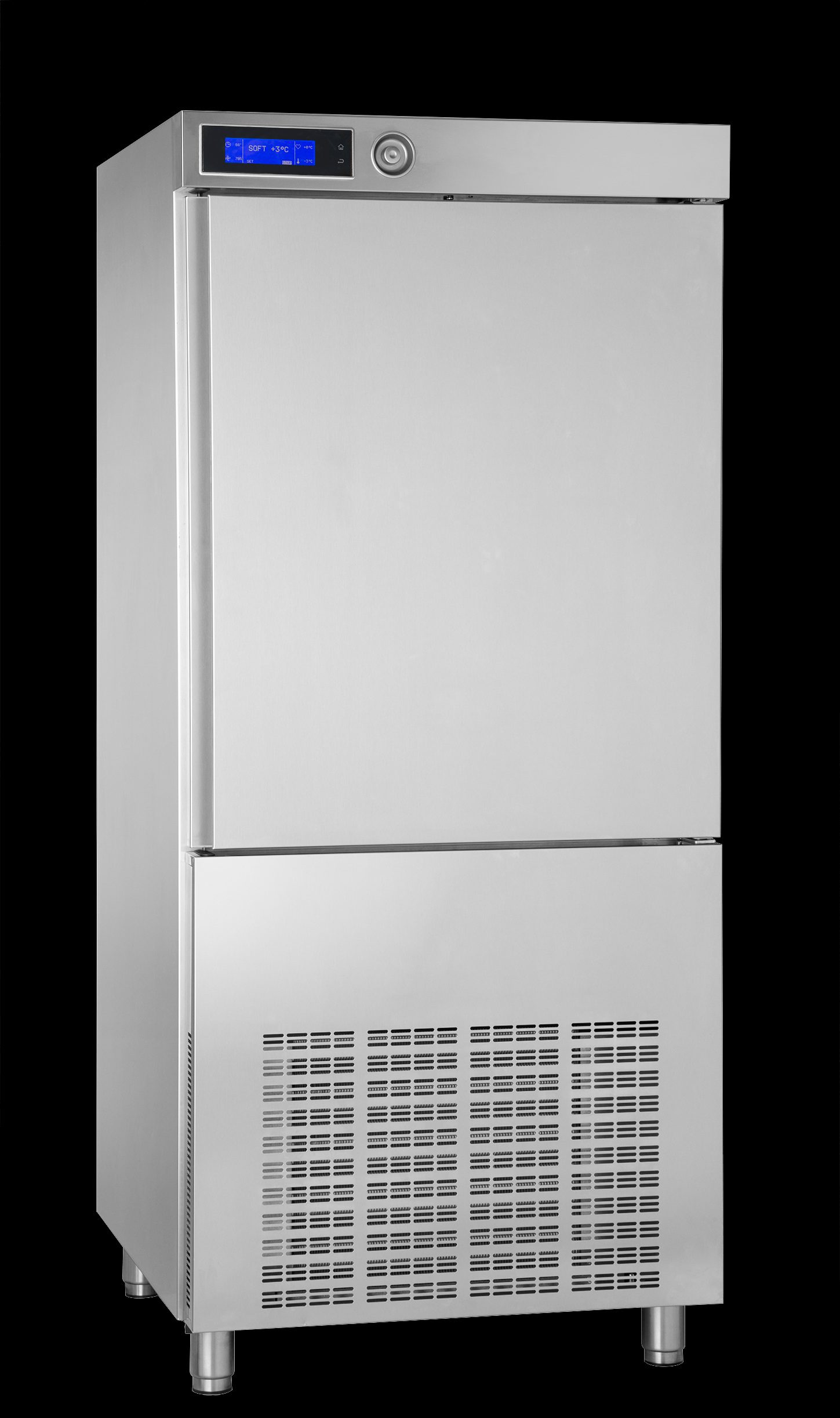
Hoshizaki Gram Blast Chillers
Models Covered: Hoshizaki Gram Blast Chillers/freezers, such as KPS 21 and KPS 42 (numeric roughly indicating 21 kg and 42 kg capacities). Gram Commercial (part of Hoshizaki) is known in the UK for premium refrigeration – their blast chillers emphasize HACCP compliance and energy efficiency.
Common Faults & Error Codes: Gram uses a slightly different notation for alarms. Many Gram units display the prefix “AL” for alarms and “ER” for errors, sometimes with multiple letters (e.g., “ALL” as an alarm code tag in manuals). Key alarms include:
- ALL High Press – High pressure alarm (likely similar to other brands’ HP alarm). If the high-pressure switch trips, an alarm is logged as “ALL High Press” with cause “High pressure switch activated”. This will stop the compressor for safety.
- ALL Room Sensor – The cabinet (room) sensor is defective. Similarly, ALL Evap Sensor (evaporator probe fault) and ALL Cond Sensor (condenser probe fault on remote units) are shown if those temperature sensors fail.
- ALL Probe / Insert Probe – Gram units often have a food probe. “ALL Probe” means the core needle probe itself is defective, whereas “ALL Insert Probe” means the cycle expected a probe but didn’t detect it inserted in food. In the latter case, the controller will automatically switch the blast cycle from probe-controlled to time-controlled to continue the processmanualslib.commanualslib.com.
- High T Room – Indicates the room temperature went too high above setpoint during storage. For example, if holding at +2 °C, and the temperature rose above +12 °C (setpoint + 10°C threshold) due to a door left open or a warm load, a High T alarm triggers. This is a HACCP alarm scenario.
- Gram’s error codes often appear as scrolling text or codes like
E1,E2on the display as well, depending on model. For instance, a cabinet probe error might show “Pr1” or “ER1” on some Gram controllers, corresponding to the alarm description PR1 (cell sensor error). However, in many Gram manuals, they use the textual “ALL” alarms for clarity.
Diagnostic Procedure:
- High Pressure Alarm: Treat an “ALL High Press” alarm just as you would on other equipment – check the condenser and ambient conditions. Gram blast chillers often are installed with proper clearances, but ensure the unit is not too close to a wall or heat source (the manual notes this as a possible cause)manualslib.commanualslib.com. After a high-pressure alarm, the Gram controller may require a manual reset of the alarm (acknowledging it) and it might lockout cooling until the issue is fixed. Thus, once you clean the condenser and verify the condenser fan runs, reset the alarm via the control panel (there may be an alarm menu or by cycling power). If the alarm repeats, a qualified technician is required – likely causes could be a failed fan motor, overcharged refrigerant, or blocked condenser filter (some Gram units have an air filter to clean). Note: Gram emphasizes contacting their service department for such errors, highlighting that this is not an error to ignore.
- Sensor Failures (Room/Evap/Cond Probe): For any “sensor defect” alarm, the approach is to replace the faulty sensor. Gram’s alarm list suggests that these issues require a qualified tech to resolve. For a room (cabinet) sensor fault, the chiller will usually still run using a backup logic (like cycling the compressor) to protect the contents. Still, you should promptly fit a new temperature probe. Locate the sensor (cabinet sensors are often in the return airflow, evap sensors on coil fins) and check if its wire is damaged or disconnected. After installing a new sensor, test the reading via service mode. The alarm will clear once the controller reads a valid temperature. If a condenser sensor (on remote systems) fails, that could affect condenser fan speed control – again, fit a new probe. The evaporator probe failure will make defrosts time-based (instead of stopping on temperature), so watch for any icing until it’s fixed.
- Core Probe Issues: If you see “ALL Probe” (probe defective), try inserting the core probe into ice water and see if it registers temperature – if not, it’s likely broken. Replace the core probe. If the alarm is “Insert Probe”, simply note that the user started a cycle in probe mode but didn’t use the probe. The controller switched to time mode automatically. No repair is needed other than educating staff: either use the probe properly or intentionally run in timer mode. The alarm can usually be cleared by pressing an acknowledge button. It’s more of a notification – Gram even notes you can “ignore the error code” in this casemanualslib.commanualslib.com.
- High Room Temp (Storage alarm): Investigate why the storage temp rose. Common causes: door left ajar, fan failure, or insufficient refrigeration after repeated blasts. Check door seals and that the fan inside the cabinet runs during holding. If the unit has a hot gas bypass or capacity control, ensure it’s functioning, as these help maintain stable hold temps. After correcting the cause (closing door, etc.), Gram’s alarm will reset when the cabinet returns to below the threshold (or can be acknowledged). If the unit is repeatedly hitting high temp alarms in storage, consider scheduling a maintenance check – it could be struggling with load or needs refrigerant top-up.
Unique Features: Gram KPS chillers often come with user-friendly interfaces that log alarms and allow parameter adjustments. They meet strict guidelines for cook-chill. Ensure after any service that the HACCP alarm log is reviewed and cleared if needed – these units store alarms until manually cleared, to ensure the user sees them. As a technician, after fixing issues, you should document what was done in case of any food safety audit.
Sources & Manuals: Gram’s Operating Instructions for KPS Series (available via Gram or Hoshizaki) contains an error code table with causes and remediesmanualslib.commanualslib.com. It explicitly lists what each alarm means and often the recommended action (“Qualified technician required” for many). Always reference the model-specific manual because settings (like alarm thresholds, defrost intervals) may differ. Additionally, Hoshizaki’s support site can provide technical bulletins since Gram is under their umbrella.